Introduction
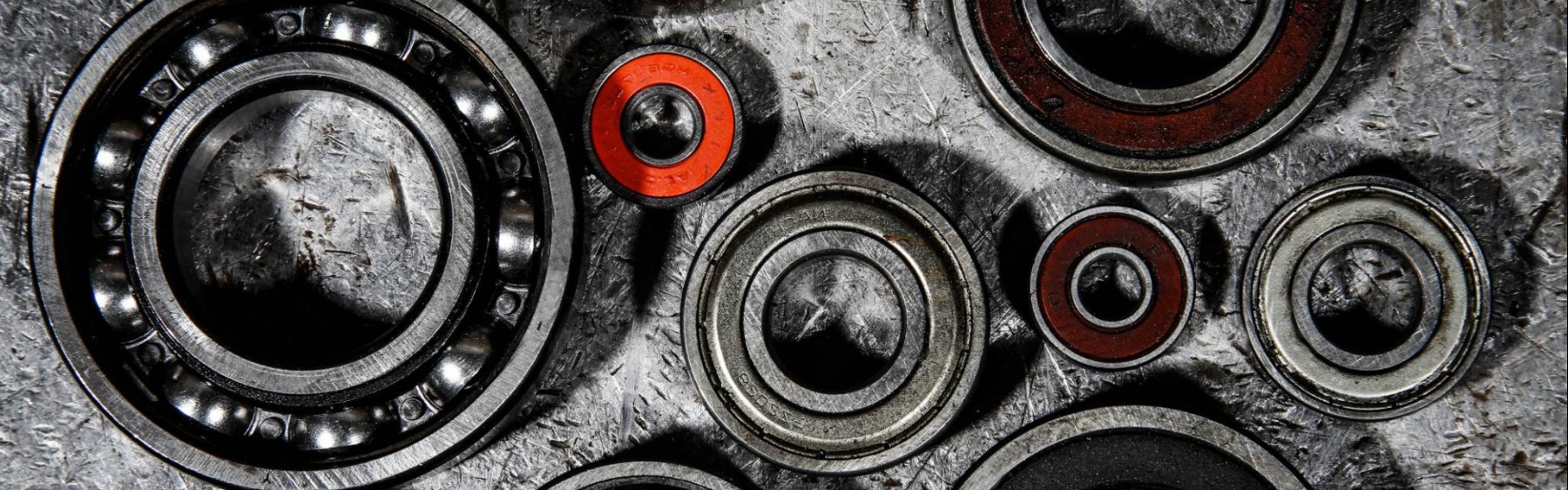
Ball and roller bearings are two of the most fundamental types of rolling-element bearings used in modern mechanical systems. They reduce friction between moving parts, support loads, and improve efficiency in everything from small electric motors to heavy industrial machinery.
While both serve similar purposes, their internal design and load-handling characteristics are different, making each suitable for specific applications.
Ball Bearings
Ball bearings use spherical rolling elements (balls) between the inner and outer rings.
Key characteristics:
- Low friction and smooth rotation
- High-speed capability
- Best for light to moderate loads
- Suitable for both radial and limited axial loads
Common applications:
- Electric motors
- Household appliances
- Automotive components
- Precision instruments
Roller Bearings
Roller bearings use cylindrical, tapered, or needle-shaped rollers instead of balls, increasing contact area.
Key characteristics:
- Higher load capacity than ball bearings
- Better performance under heavy radial loads
- Less suited for very high speeds (depending on type)
- Excellent rigidity and durability
Common types:
- Cylindrical roller bearings
- Tapered roller bearings
- Needle roller bearings
Common applications:
- Heavy machinery
- Gearboxes and transmissions
- Mining and construction equipment
- Industrial gear systems
Ball vs Roller Bearings
| Feature | Ball Bearings | Roller Bearings |
|---|---|---|
| Contact type | Point contact | Line contact |
| Load capacity | Lower | Higher |
| Speed capability | Higher | Moderate to high |
| Friction | Very low | Slightly higher |
| Best use | Precision, speed | Heavy loads |
Materials and Manufacturing
Both bearing types are typically made from:
- High-carbon chromium steel
- Stainless steel (corrosion resistance)
- Ceramic hybrids (high-speed applications)
Precision grinding and heat treatment ensure durability, wear resistance, and dimensional accuracy.
Applications Overview
Ball and roller bearings are used across almost every industry:
- Automotive systems
- Industrial machinery
- Aerospace components
- Robotics and automation
- Energy and power generation
- Consumer electronics
Conclusion
Ball and roller bearings are essential components in mechanical engineering, each optimized for different performance needs. Ball bearings excel in speed and precision, while roller bearings dominate in heavy-load applications. Choosing the right type ensures efficiency, durability, and system reliability.